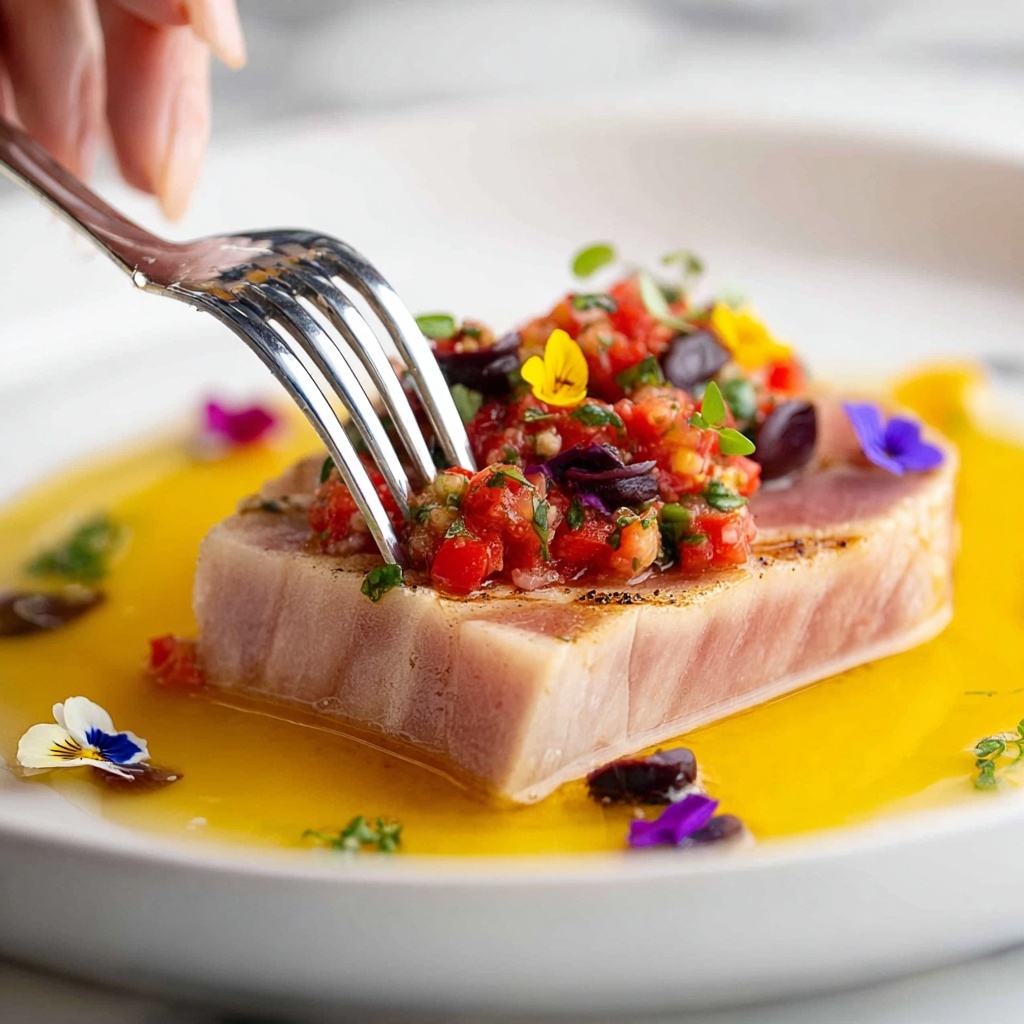
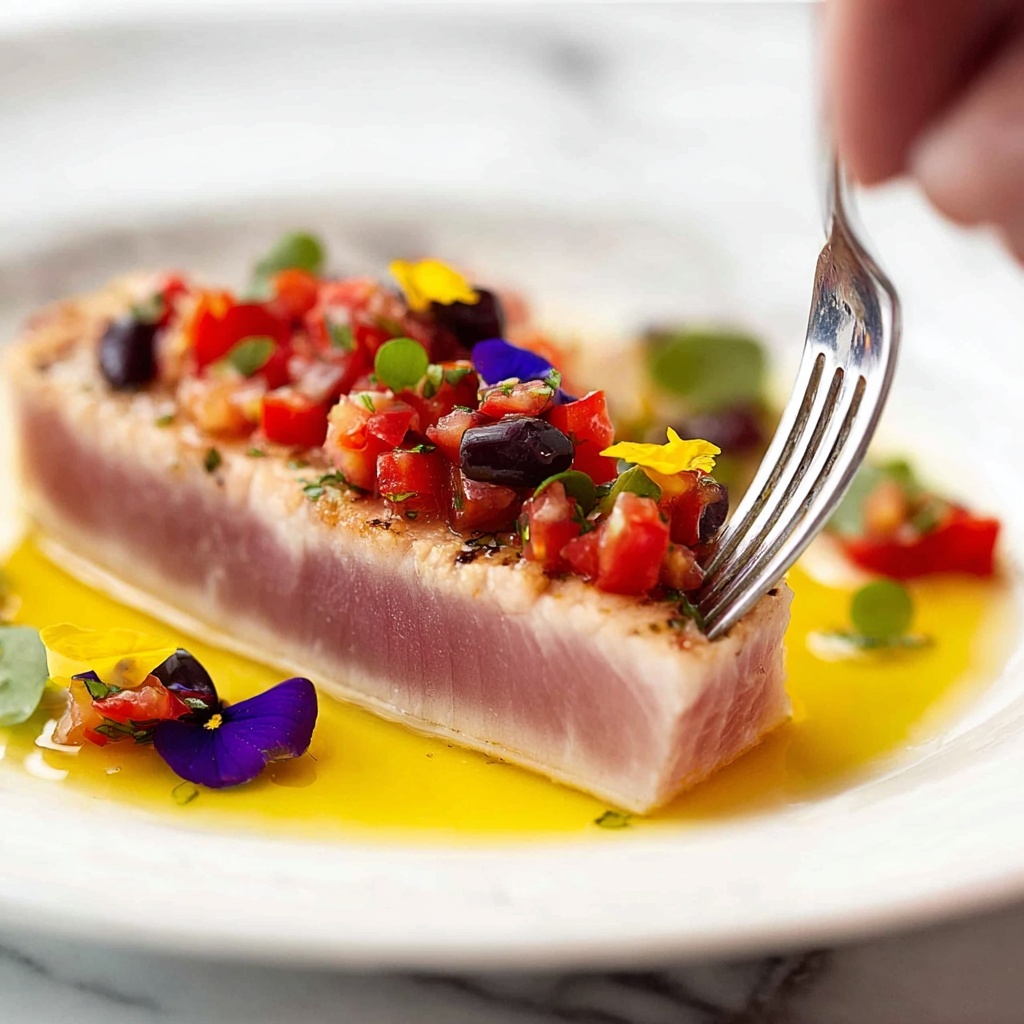
If you are looking to impress with a dish that is as elegant as it is simple, the Seared Tuna Steak with Sauce Vierge Recipe is an absolute winner. This recipe delivers a perfectly seared tuna steak, moist and tender on the inside with beautiful grill marks, paired with a light, fresh sauce vierge that bursts with citrusy, herby goodness. It’s a celebration of clean flavors and effortless style that feels like a special treat, whether it’s a weeknight dinner or a weekend feast with friends. Once you try this, you’ll understand why it quickly becomes a go-to recipe for seafood lovers everywhere.
Ingredients You’ll Need
These ingredients might be few in number, but they play very important roles in creating that ideal balance of flavor, texture, and vibrancy in the dish. Using top-quality tuna and fresh herbs really lets the simplicity shine through, while olive oil and seasoning bring everything together harmoniously.
- Tuna steak (2 x 180-200g / 6.5-7oz): Thick, skinless, and boneless steaks are best for that perfect sear and tender center.
- Olive oil (about 3 tsp total): Adds richness and helps achieve the beautiful golden crust while keeping the fish moist.
- Sea salt (1/4 tsp): Enhances the natural flavor of the tuna without overwhelming it.
- Black pepper (1/8 tsp): Provides a subtle warmth and spice that complements the fresh tuna.
- Sauce Vierge: A zesty, French-style vinaigrette that features vibrant olive oil, fresh herbs, and citrus notes to brighten the dish.
- Chervil sprigs or small parsley leaves: A lovely garnish adding a delicate herbal note and a splash of green color.
How to Make Seared Tuna Steak with Sauce Vierge Recipe
Step 1: Prepare Your Workstation
Start by placing a rack on a tray to rest your tuna once it’s cooked. This resting spot is essential because it will allow air to circulate underneath the steak, preventing the bottom from steaming and maintaining that crisp crust you worked so hard for.
Step 2: Season and Oil the Tuna
Drizzle half of your olive oil over the tuna steaks and spread it evenly on one side using your fingers or a brush. Then sprinkle half the sea salt and black pepper on that side, flip the steak, and repeat the process. This step ensures that your tuna is perfectly seasoned and lightly oiled for a flawless sear.
Step 3: Heat the Skillet
Place your skillet on high heat and wait until it’s smoking hot. The key to getting those iconic sear marks and a flavorful crust is a super hot pan. A skillet with grill lines adds extra visual appeal, but a regular heavy-bottomed skillet works just as well.
Step 4: Oil the Skillet if Needed
If your skillet isn’t well-seasoned or naturally non-stick, brush a little olive oil on it or use an oil spray, but be sure to take the pan off the heat before spraying for safety. You want enough oil to prevent sticking but not a puddle that fries the fish.
Step 5: Cook the First Side
Place the tuna steak into the skillet. I recommend cooking one piece at a time for the best control and results. Let it cook undisturbed for 45 seconds to develop that gorgeous sear.
Step 6: Rotate for Grill Marks
Turn the steak 45 degrees on the same side and cook for another 45 seconds. This creates those beautiful crosshatch grill lines that are as delicious as they are eye-catching.
Step 7: Flip and Finish Cooking
Gently flip the tuna steak and cook for about 1 minute until the center reaches 48°C (118°F) if you’re using a meat thermometer. This timing locks in a tender, medium-rare interior that melts in your mouth.
Step 8: Rest the Tuna
Transfer the tuna to your prepared rack and let it rest for 5 minutes. Resting is what makes slicing easier and keeps the juices inside the steak, meaning every bite is succulent and flavorful. Trust me, this little wait is worth it!
Step 9: Serve with Sauce Vierge
Top your perfectly rested tuna steaks with a generous spoonful of the fresh sauce vierge. The herby, zesty sauce brings an irresistible brightness and complexity that perfectly complements the rich tuna.
How to Serve Seared Tuna Steak with Sauce Vierge Recipe
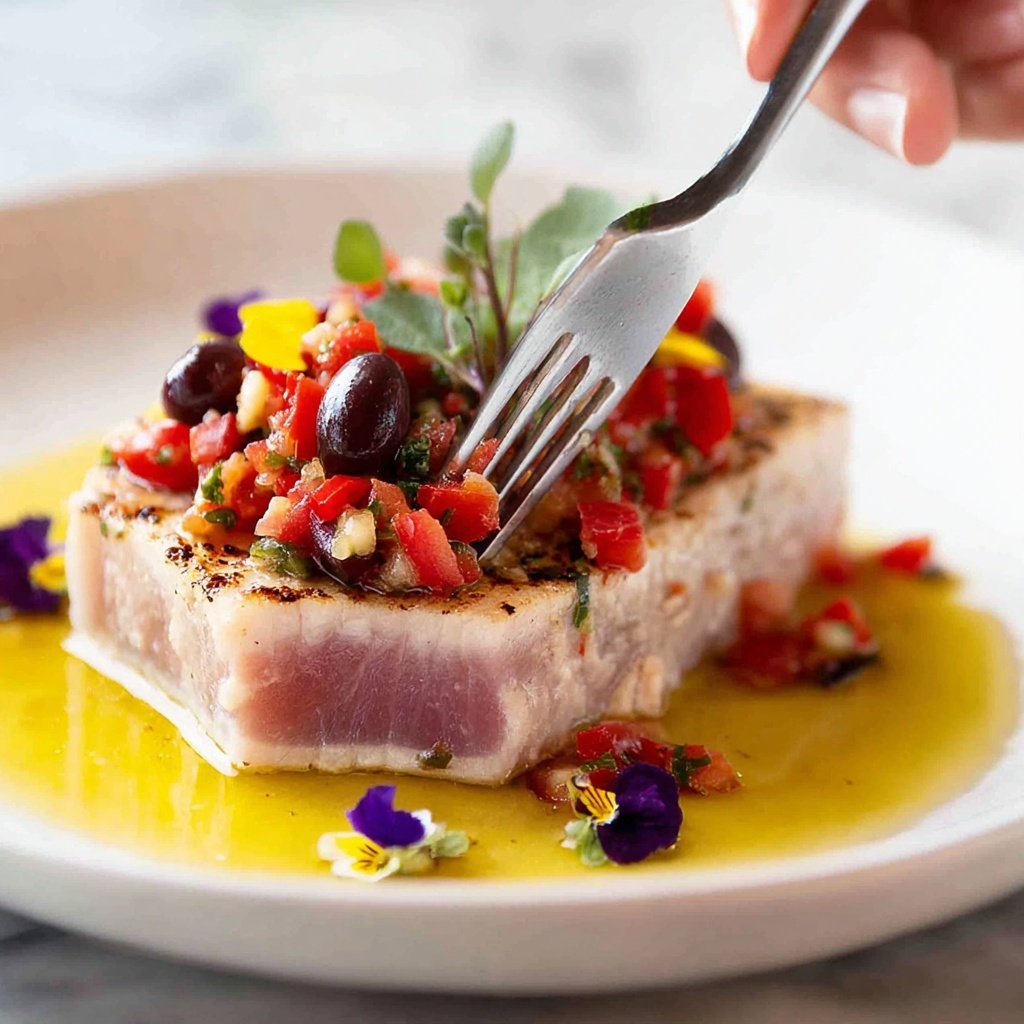
Garnishes
Sprinkle a few fresh chervil sprigs or small parsley leaves on top to add a pop of vibrant green, modest herbaceous aroma, and a touch of elegance. If you’re feeling fancy, edible flowers also make a stunning garnish that elevates presentation to restaurant quality.
Side Dishes
This dish pairs wonderfully with light, fresh sides like a crisp mixed greens salad, roasted baby potatoes, or quinoa tossed with lemon zest and herbs. These sides provide contrast without overpowering the delicate tuna and bright sauce.
Creative Ways to Present
For a stylish touch, slice the tuna into thin medallions and fan them on a plate with a drizzle of sauce vierge around the edges. Another lovely option is to serve the tuna whole on a rustic wooden board alongside small bowls of the sauce and colorful veggies, encouraging a relaxed, shareable meal vibe.
Make Ahead and Storage
Storing Leftovers
If you happen to have leftovers, wrap the tuna steaks tightly in plastic wrap or store them in an airtight container in the fridge. They are best eaten within 24 hours for optimal freshness and texture.
Freezing
Freezing seared tuna isn’t ideal because it can alter the delicate texture once thawed. However, if you must freeze, wrap the steaks tightly in plastic wrap followed by foil and use within one month. Thaw slowly in the fridge before reheating gently.
Reheating
When reheating, do so very gently either in a low oven or briefly in a warm pan, just enough to take the chill off without cooking the tuna further. Overheating will dry out that prized tender center, so less is more here.
FAQs
Can I use frozen tuna steaks for this recipe?
Absolutely, but it’s best to thaw them completely in the refrigerator before cooking for even searing and consistent texture. Pat them dry thoroughly to avoid steaming rather than searing.
What if I don’t have a grill pan?
No worries! A regular skillet works just as well to get a lovely crust on the tuna. Just be sure it gets very hot before cooking, and you can still achieve a delicious sear.
Is Sauce Vierge difficult to make?
Not at all! Sauce Vierge is a simple vinaigrette-style sauce made with olive oil, fresh herbs, lemon, and tomatoes. It comes together quickly and adds beautiful freshness to the tuna.
Can I substitute other fish for tuna?
Yes, you can experiment with other firm, meaty fish like swordfish or swordfish. Just adjust cooking times as these fish vary in thickness and texture compared to tuna.
How rare should tuna be cooked?
Seared tuna is best enjoyed medium-rare, with a warm, cooked exterior and a cool, tender center. Cooking beyond this point can make it dry and less flavorful.
Final Thoughts
If you’re craving a dish that feels indulgent yet surprisingly straightforward, the Seared Tuna Steak with Sauce Vierge Recipe is a fantastic choice. It brings together the best of vibrant, fresh flavors and stunning presentation with minimal effort. Trust me, once you make it, you’ll keep coming back to this recipe whenever you want to treat yourself or impress your guests. Give it a go and enjoy the delicious rewards!
Print
Seared Tuna Steak with Sauce Vierge Recipe
- Prep Time: 5 minutes
- Cook Time: 3 minutes
- Total Time: 8 minutes
- Yield: 2 servings
- Category: Main Course
- Method: Frying
- Cuisine: French
- Diet: Low Fat
Description
A quick and delicious tuna steak recipe perfect for a healthy, high-protein meal. The tuna is seasoned simply, seared in a hot skillet to create beautiful grill lines while maintaining a tender and moist interior, and served with a fresh and vibrant sauce vierge.
Ingredients
Tuna Steak
- 2 x 180-200g (6.5-7oz) tuna steaks, skinless, boneless, about 2.5-3cm (1-1.2″) thick
- 1 tsp olive oil
- 1/4 tsp sea salt
- 1/8 tsp black pepper
- 2 tsp olive oil (or oil spray for the skillet)
Accompaniments
- Sauce Vierge (French salsa/vinaigrette for fish)
- Chervil sprigs (or substitute with small flat leaf or curly parsley leaves or small edible flowers, optional)
Instructions
- Prepare resting tray: Place a rack on a tray to allow the tuna steaks to rest properly after cooking without becoming soggy.
- Oil and season tuna: Drizzle half the olive oil over the tuna and smear evenly on one side. Sprinkle half the salt and pepper. Flip and repeat on the other side.
- Heat skillet: Heat a skillet, preferably with grill lines, over high heat until it is smoking hot. This ensures a great sear and caramelization.
- Oil skillet (if required): If the skillet isn’t well-seasoned, brush it lightly with olive oil or carefully spray with oil when off the stove to prevent sticking.
- Cook first side: Place the tuna steak in the hot skillet (cook one at a time for best results). Cook undisturbed for 45 seconds to develop grill marks.
- Rotate for grill lines: Turn the steak 45 degrees to create crosshatch grill lines and cook for another 45 seconds on the same side.
- Cook other side: Flip the tuna carefully and cook for 1 minute or until the internal temperature reaches 48°C (118°F) for rare to medium-rare doneness.
- Rest: Remove the tuna from the skillet and place it on the rack to rest for 5 minutes. This lets the fish cool to near room temperature and makes slicing easier and more enjoyable.
- Serve: Serve tuna steaks with sauce vierge and garnish with chervil or parsley sprigs, or edible flowers as preferred.
Notes
- Note 1: Tuna steaks should be about 2.5-3cm thick for optimal searing and cooking times.
- Note 2: Sauce vierge is a classic French vinaigrette with fresh tomatoes, herbs, olive oil, and lemon juice—perfect for light fish dishes.
- Note 3: Resting the tuna on a rack prevents the base from steaming and losing its crust.
- Note 4: When spraying oil on the pan, always remove it from the heat to avoid flare-ups or injury.
- Note 5: Cooking one steak at a time ensures even heat and proper searing.
- Note 6: Internal temperature of 48°C (118°F) corresponds to rare to medium-rare tuna, which maintains moistness and delicate texture.
- Note 7: Resting allows the tuna to cool, making it easier to slice thinly without breaking apart.