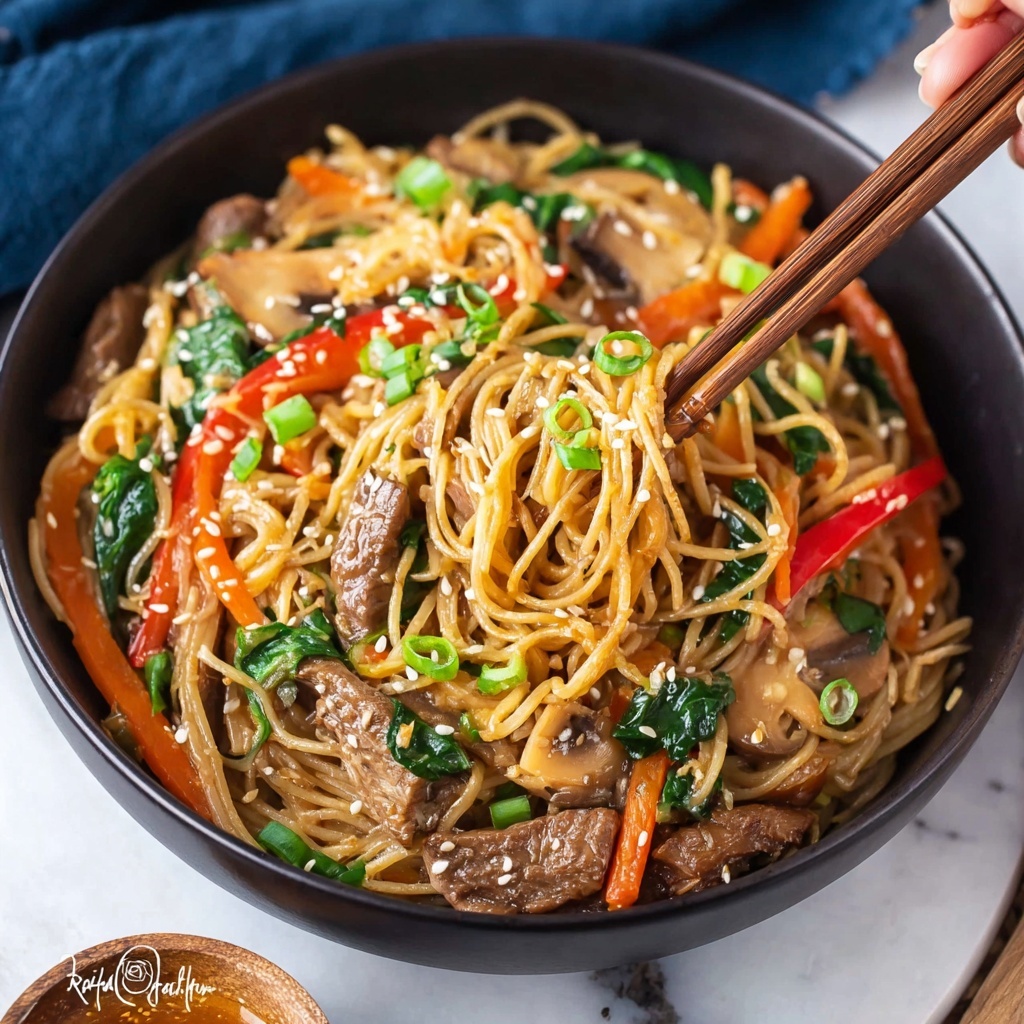
If you have ever wanted to experience the vibrant colors, delightful textures, and harmonious flavors of Korean cuisine right in your own kitchen, then this Japchae (Korean Glass Noodles Stir-Fry) Recipe is your perfect gateway. Japchae is a beloved traditional dish that dazzles with its glossy sweet-soy glaze, tender beef, crisp vegetables, and those luscious, chewy glass noodles that soak up every bit of savory goodness. Whether you’re cooking for family, friends, or treating yourself, this recipe brings all the magic of Korea’s favorite noodle stir-fry to your plate with an exciting but approachable process.
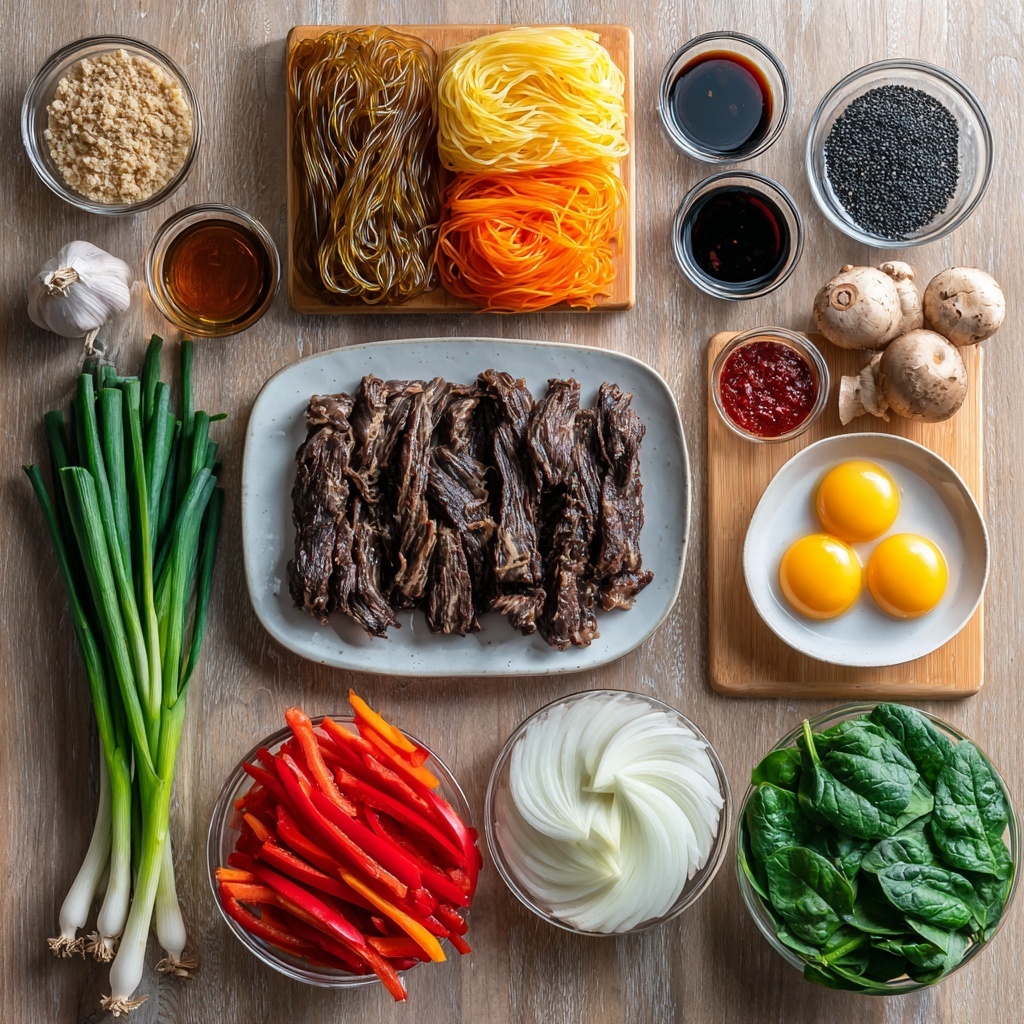
Ingredients You’ll Need
The beauty of this Japchae (Korean Glass Noodles Stir-Fry) Recipe is in its delightfully simple yet essential ingredients. Each one adds its unique magic—whether it’s the rich umami of soy sauce, the sweetness from brown sugar, the fresh crunch of veggies, or the aromatic depth of sesame oil—to create a perfectly balanced dish.
- Soy sauce or tamari (⅓ cup + 1 tablespoon, divided): This is the salty backbone and umami powerhouse of the dish, enhancing every element.
- Brown sugar (2 tablespoons, divided): Adds a subtle sweetness that rounds out the flavor and gives Japchae its signature glossy coating.
- Rice vinegar (2 teaspoons): Lends a mild tang that lifts and brightens the flavors.
- Toasted sesame oil (4 teaspoons, divided): Infuses a warm, nutty aroma that is essential in Korean cooking.
- Minced garlic (1 ½ teaspoons, divided): Delivers a fresh and sharp punch that enhances the savory profile.
- Black pepper (1 teaspoon): Provides just the right hint of heat and complexity.
- Salt (¾ teaspoon, divided): Balances the flavors perfectly.
- Boneless beef short ribs (1 pound, thinly sliced): Offers juicy richness and satisfying meaty texture.
- Gochujang or sriracha (½ teaspoon, optional): Adds a subtle spicy kick for those who love a touch of heat.
- Glass noodles (8 ounces): The star ingredient—chewy, translucent noodles that soak up all the delicious sauce.
- Avocado oil (3 tablespoons, divided): A neutral cooking oil that prevents sticking and helps sear ingredients beautifully.
- Large eggs (2): Whisked and pan-fried into delicate strips to add protein and color.
- Carrots (2 medium, peeled and thinly sliced): Provide a natural sweetness and vibrant orange crunch.
- Red bell pepper (1, thinly sliced): Delivers bright color and juicy, sweet flavor.
- Small white onion (1, thinly sliced): Adds mild sharpness and texture.
- Button mushrooms (1 cup, sliced): Bring earthiness and umami depth.
- Green onions (3, white and green parts separated and thinly sliced): Offer freshness and a mild onion flavor in different textures.
- Baby spinach (2 cups): Adds a lovely green color and tender greens that wilt perfectly.
- Toasted sesame seeds (optional): Sprinkled on top for nutty crunch and an inviting finish.
How to Make Japchae (Korean Glass Noodles Stir-Fry) Recipe
Step 1: Marinate the Beef
The journey to amazing Japchae starts with a flavorful marinade that tenderizes and season the beef to perfection. Whisk together 1 tablespoon soy sauce, 1 tablespoon brown sugar, rice vinegar, sesame oil, garlic, and black pepper. Toss your thinly sliced short ribs in this marinade and let it rest in the fridge for at least 30 minutes. This step infuses the beef with a sweet and savory boost that’s just irresistible once cooked.
Step 2: Prepare the Sauce
While your beef marinates, mix up the main sauce that will coat those glass noodles and veggies in a mouthwatering glaze. Combine the remaining soy sauce, brown sugar, sesame oil, garlic, gochujang (if using), black pepper, and salt in a bowl. This sauce is perfectly balanced—sweet, salty, and with a hint of spice—that ties every ingredient together beautifully.
Step 3: Cook the Glass Noodles
Follow the package instructions to boil the glass noodles. Once cooked, drain them well and toss with half of the sauce to start building flavor. These noodles are the heart of the dish, their delicate texture paired with the sauce just melts in your mouth.
Step 4: Make the Egg Strips
Whisk the eggs with a pinch of salt and cook them in a thin layer in a hot skillet with avocado oil. Once set, transfer the large egg pancake to a cutting board and slice into thin strips. These tender egg ribbons add a lovely protein-rich texture and a pop of golden color that brightens the dish.
Step 5: Sauté the Vegetables
Using avocado oil again, start by cooking the carrots alone for a few minutes to maintain their crunch. Then add bell pepper and white onion slices, cooking until just tender. Transfer these to the noodles before moving on to mushrooms, white parts of the green onions, and spinach in the same pan. The sautéing process softens the veggies while preserving their fresh flavors and brilliant colors.
Step 6: Cook the Marinated Beef
Finally, it’s time to get that marinated beef sizzling. Use a hot wok or skillet, cooking the beef in batches to ensure a nice sear and caramelization. This step locks in the juicy flavor and gives the meat a wonderfully crisp edge. Once browned and cooked through, toss it together with the noodles, eggs, and veggies, then drizzle the remaining sauce over everything. Give it a gentle toss to combine all those amazing textures and tastes.
How to Serve Japchae (Korean Glass Noodles Stir-Fry) Recipe
Garnishes
To elevate your Japchae visually and texturally, sprinkle toasted sesame seeds and the green parts of the sliced green onions on top just before serving. These final touches add nutty crunch and fresh herbal notes that truly complete the dish.
Side Dishes
Japchae pairs beautifully with simple Korean sides like kimchi, pickled radishes, or a light cucumber salad. These fresh and tangy accompaniments balance the richness of Japchae, making your meal even more dynamic and satisfying.
Creative Ways to Present
For a fun twist, serve Japchae in warm lettuce cups or as a noodle bowl with a fried egg riding on top. You can also mix in toasted nuts like pine nuts or cashews for an unexpected crunch. This Japchae (Korean Glass Noodles Stir-Fry) Recipe is wonderfully versatile and perfect to get creative with.
Make Ahead and Storage
Storing Leftovers
Japchae tastes fantastic the next day, making it a smart make-ahead meal. Store leftovers in an airtight container in the refrigerator for up to 3 days. The noodles will soak in more sauce, becoming even tastier over time.
Freezing
While fresh Japchae is best, you can freeze leftovers if necessary. Place cooled Japchae in freezer-safe containers, making sure to leave some headroom for expansion. For best texture, consume within 1 month. Note that some vegetables may become a little softer upon thawing.
Reheating
To reheat, warm Japchae gently on the stovetop in a skillet over low to medium heat, adding a splash of water or soy sauce to loosen the noodles. Stir frequently until heated through. Avoid microwaving if possible to preserve texture and flavor.
FAQs
Can I make Japchae vegetarian or vegan?
Absolutely! Simply omit the beef and egg, and double up on the veggies or add tofu for protein. Using mushroom broth in place of any meat stock helps deepen the flavor, keeping it just as satisfying.
What type of noodles are best for Japchae?
Sweet potato starch noodles, known as dangmyeon in Korean, are traditionally used. These translucent glass noodles have a chewy texture that absorbs the sauce beautifully. You can typically find them in Asian grocery stores or online.
Is the gochujang necessary?
Gochujang adds a lovely mild heat and complex flavor, but it’s optional. If you prefer a milder stir-fry, feel free to leave it out or swap it with sriracha or omit spicy elements entirely.
Can I prepare Japchae ahead of time for a party?
Yes! You can make all components separately and combine just before serving to maintain freshness and optimal texture. Japchae is a fantastic dish to impress guests with vibrant colors and bold flavors.
Why does my Japchae sometimes get mushy?
Overcooking the noodles or veggies can cause mushiness. Be sure to cook noodles al dente and sauté vegetables just until tender-crisp. Tossing noodles immediately with sauce also helps maintain perfect texture.
Final Thoughts
If you’re craving a delicious, colorful, and truly comforting dish that bursts with authentic Korean flavors, this Japchae (Korean Glass Noodles Stir-Fry) Recipe is a treasure you must try. It’s a wonderful balance of sweet, savory, and fresh that will brighten any meal and win hearts around your table. Once you make it, Japchae will become one of those go-to recipes you turn to again and again. So grab those noodles and vibrant veggies, and get ready to fall in love with this classic Korean delight!
Print
Japchae (Korean Glass Noodles Stir-Fry) Recipe
- Prep Time: 15 minutes
- Cook Time: 45 minutes
- Total Time: 1 hour
- Yield: 5 servings
- Category: Stir-Fry
- Method: Stovetop
- Cuisine: Korean
Description
Japchae is a classic Korean dish featuring glass noodles stir-fried with marinated beef and a colorful variety of sautéed vegetables. This recipe balances savory, sweet, and slightly spicy flavors with a glossy sesame oil finish, perfect for a satisfying and vibrant meal.
Ingredients
Marinade and Sauce
- ⅓ cup + 1 tablespoon soy sauce or tamari (divided)
- 2 tablespoons packed brown sugar (divided)
- 2 teaspoons rice vinegar
- 4 teaspoons toasted sesame oil (divided)
- 1 ½ teaspoons minced garlic (divided)
- 1 teaspoon black pepper
- ¾ teaspoon salt (divided)
- ½ teaspoon gochujang or sriracha (optional)
Main Ingredients
- 1 pound boneless beef short ribs (thinly sliced)
- 8 ounces glass noodles
- 3 tablespoons avocado oil (divided)
- 2 large eggs
- 2 medium carrots (peeled and thinly sliced)
- 1 red bell pepper (thinly sliced)
- 1 small white onion (thinly sliced)
- 1 cup sliced button mushrooms
- 3 green onions, white and green parts (thinly sliced, divided)
- 2 cups baby spinach
- Toasted sesame seeds (optional)
Instructions
- Marinate the beef: Whisk together 1 tablespoon soy sauce, 1 tablespoon brown sugar, 2 teaspoons rice vinegar, 1 teaspoon sesame oil, ½ teaspoon garlic, and ½ teaspoon black pepper in a large bowl. Add beef slices and toss to coat evenly. Cover and refrigerate for 30 minutes up to 3 hours to infuse flavor.
- Make the sauce: In a medium bowl, whisk the remaining ⅓ cup soy sauce, 1 tablespoon brown sugar, 3 teaspoons sesame oil, 1 teaspoon garlic, ½ teaspoon gochujang (optional), ½ teaspoon black pepper, and ½ teaspoon salt until combined.
- Boil glass noodles: Cook glass noodles according to package instructions until tender. Drain thoroughly and transfer to a large clean bowl. Add half of the prepared sauce and toss gently to coat the noodles.
- Cook the eggs: In a small bowl, whisk eggs with ¼ teaspoon salt. Heat 1 tablespoon avocado oil in a large nonstick skillet over medium heat. Pour in eggs and swirl pan to spread evenly. Cook undisturbed for 2-3 minutes until fully set, forming a large egg pancake.
- Cut the eggs: Transfer the cooked egg pancake carefully to a cutting board. Cut in half, rotate pieces 90 degrees, then cut into ½-inch strips. Add egg strips to the bowl with the glass noodles.
- Cook the vegetables (Part 1): Heat 1 tablespoon avocado oil in a large wok or skillet over medium-high heat. Add carrots and sauté for 3 minutes, stirring occasionally. Add bell peppers and onions and cook another 2-3 minutes until softened. Transfer these vegetables to the bowl with the noodles and eggs.
- Cook the vegetables (Part 2): Add remaining 1 tablespoon avocado oil to the wok. When hot, add mushrooms and cook for 2 minutes, stirring. Add the white parts of the green onions and spinach, cooking for an additional 1 minute until spinach wilts. Transfer to the noodle bowl. Pour in the remaining soy sauce sauce mixture and toss everything to combine well.
- Cook the beef: Reheat the wok over high heat. Add the marinated beef slices, shaking off excess marinade before adding to the pan. Cook for 5 to 7 minutes until beef is seared nicely and cooked through. Transfer the cooked beef to the glass noodle mixture. Garnish with the green parts of green onions and toasted sesame seeds if desired. Serve immediately.
Notes
- Thinly slicing the beef short ribs helps them cook quickly and evenly.
- If you cannot find glass noodles, sweet potato noodles (dangmyeon) are a traditional alternative.
- Adjust gochujang or sriracha quantity to your preferred spice level, or omit for milder flavor.
- Do not overcook the spinach; it should just begin to wilt for best texture.
- Prepare all vegetables in advance as the cooking steps are quick and sequential.
- Leftover japchae can be stored in the refrigerator for up to 3 days and reheated gently.