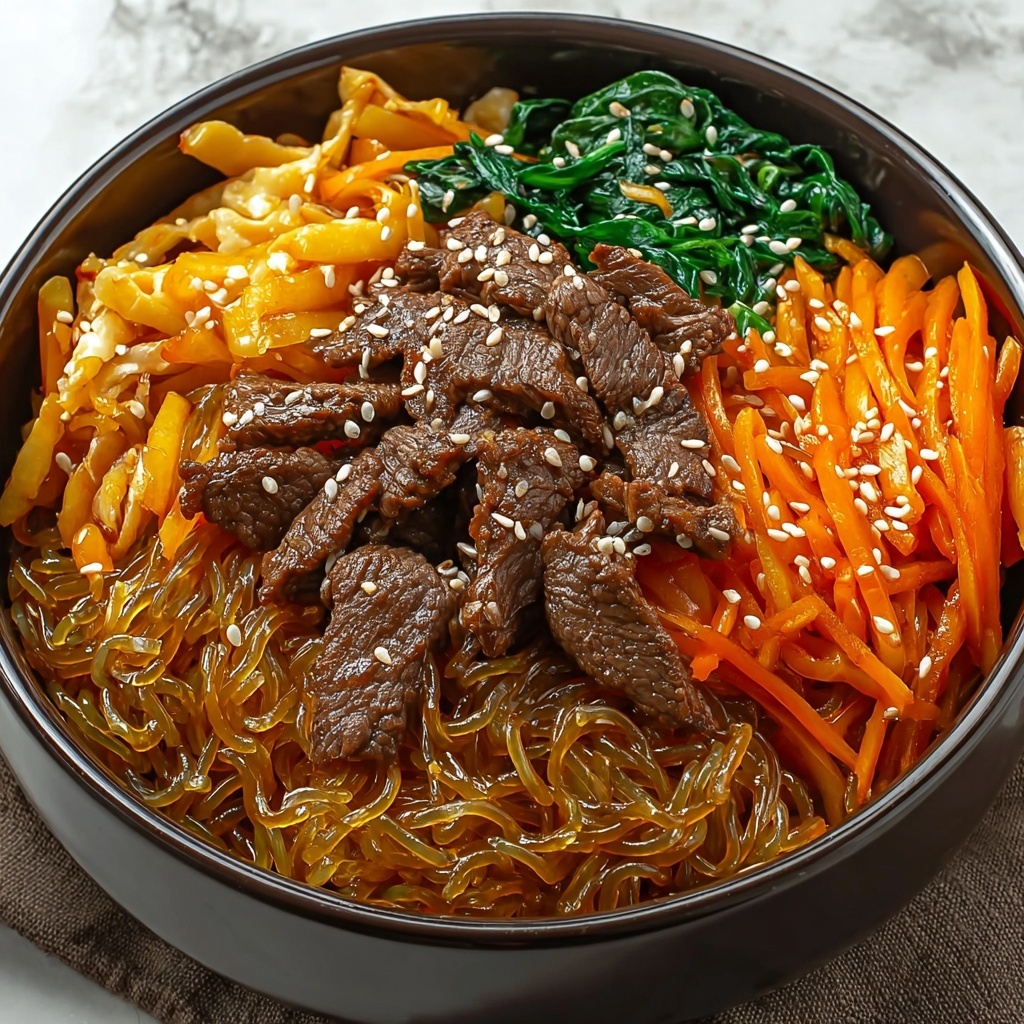
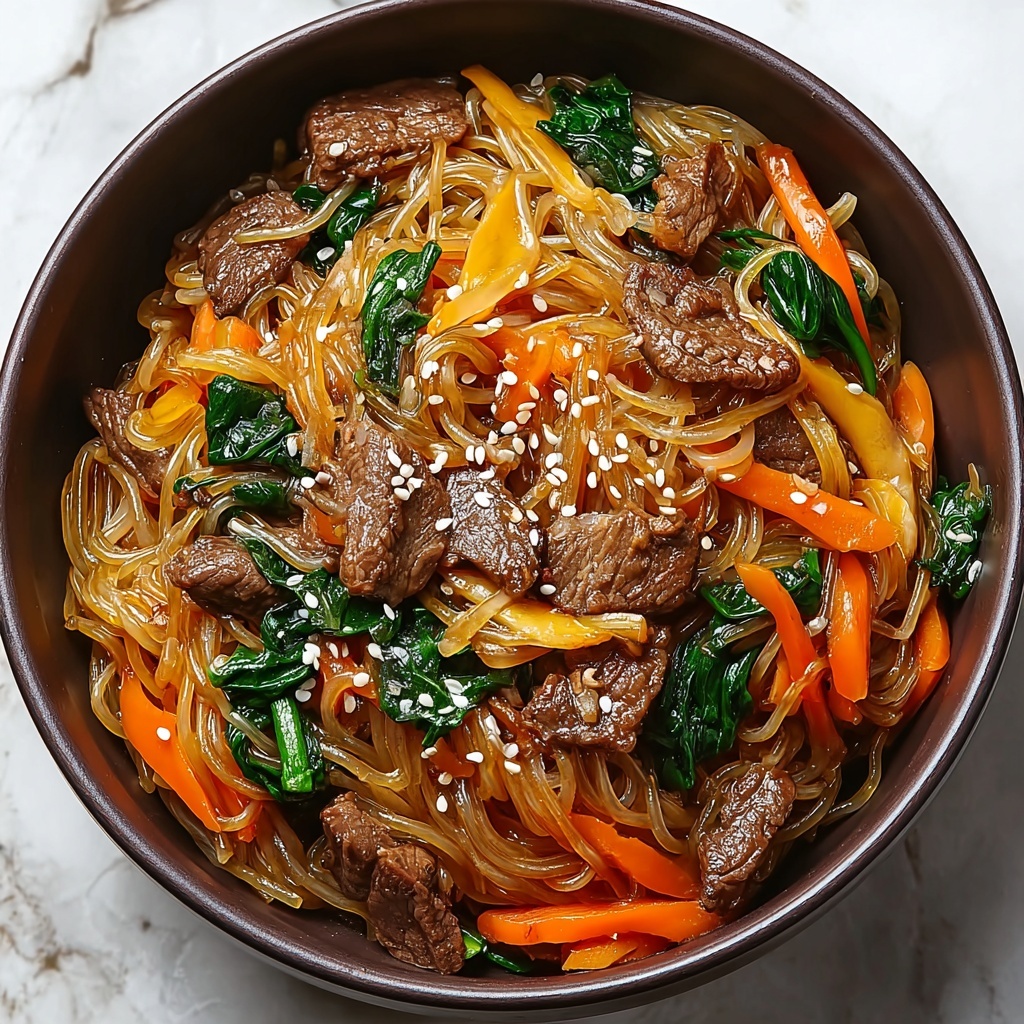
If you’re looking to dive into a vibrant, flavorful dish that always impresses, this Japchae (Korean Glass Noodle Stir-Fry) Recipe is an absolute winner. Combining tender beef, chewy sweet potato noodles, and a colorful mix of vegetables all tossed in a savory-sesame sauce, this dish delivers layers of texture and taste that are simply irresistible. Whether you’re cooking for family or hosting friends, Japchae’s harmonious blend of sweet, salty, and nutty notes will make it your new favorite go-to Korean comfort meal.
Ingredients You’ll Need
The magic of this Japchae (Korean Glass Noodle Stir-Fry) Recipe lies in its simple yet essential ingredients. Each one plays a distinct role—the chewy glass noodles for the perfect bite, the fresh veggies for crunch and color, and the beef for rich, savory depth. Every component comes together to create a dish that’s as beautiful as it is delicious.
- Thin-sliced beef (2 lb): Provides a tender, flavorful protein base that absorbs the sauce wonderfully.
- Korean sweet potato noodles (1 lb): These glass noodles have a unique chewy texture that makes Japchae so special.
- Carrots, julienned (3 medium): Add a subtle sweetness and vibrant color to the dish.
- White onion, thinly sliced (1 large): Brings a mild sharpness and soft texture after stir-frying.
- Green onions, chopped (½ bunch): Adds a fresh, oniony punch as both an ingredient and a garnish.
- Garlic cloves, minced (6): Infuses the dish with aromatic depth and savory warmth.
- Spinach leaves (½ lb): Offers bright green color and a tender, leafy texture.
- Sesame oil (4 tbsp): Imparts a nutty, toasted flavor that is signature to Korean cooking.
- Soy sauce (6 tbsp): Provides the salty-sweet backbone of the dish, balancing the flavors beautifully.
How to Make Japchae (Korean Glass Noodle Stir-Fry) Recipe
Step 1: Cook the Sweet Potato Noodles
Begin by boiling the Korean sweet potato noodles in a pot of water with a drizzle of olive oil for 5 to 6 minutes. The goal is to achieve a tender yet chewy texture—a hallmark of perfect Japchae. Once done, drain and set the noodles aside. These noodles are the canvas for all the rich, vibrant flavors coming your way.
Step 2: Brown the Beef
Next, heat a skillet over high heat and cook the thin-sliced beef with half of the soy sauce and sesame oil. This step infuses the meat with a savory and nutty essence. Cook until browned and fragrant, then remove from heat so the beef stays tender but packed with flavor.
Step 3: Stir-Fry the Veggies
In another skillet, stir-fry the julienned carrots and thinly sliced onions with olive oil until they start to soften. Then add the remaining soy sauce, sesame oil, minced garlic, and chopped green onions. Give it all a good stir and cook for another minute, allowing the flavors to marry perfectly and the aromas to fill your kitchen.
Step 4: Wilt the Spinach and Combine Everything
Stir in the spinach leaves until just wilted—this delicate step ensures the spinach remains bright and tender. Now, gather the cooked noodles, beef, and veggie mixture in a large mixing bowl. Toss everything together thoroughly so every strand of noodle is coated with that savory, silky sauce and the textures meld perfectly.
Step 5: Serve Warm
Transfer your Japchae to serving plates while still warm for the best experience. This dish shines right out of the pan and is best enjoyed immediately when the flavors and textures are at their peak.
How to Serve Japchae (Korean Glass Noodle Stir-Fry) Recipe
Garnishes
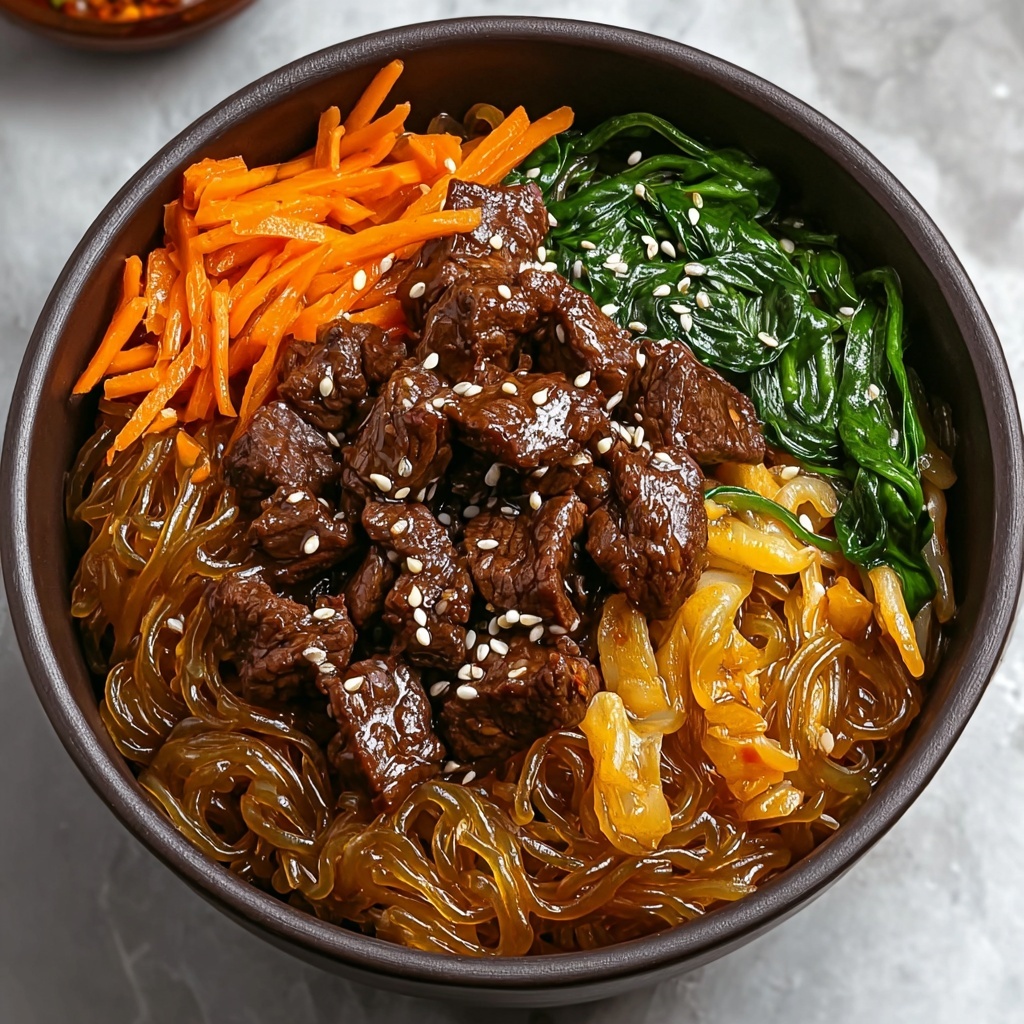
A sprinkle of chopped green onions or a handful of toasted sesame seeds adds a bright, appealing finish to Japchae. These simple garnishes enhance the dish’s texture and visual appeal, making every bite exciting and delicious.
Side Dishes
Japchae pairs wonderfully with traditional Korean sides like kimchi or pickled radishes. The crisp and tangy profiles of these sides contrast beautifully with the mellow, rich noodles, creating a balanced and satisfying meal.
Creative Ways to Present
For a fun twist, try serving Japchae in lettuce cups or alongside grilled meats to turn it into a shareable party dish. You can also toss it into a warm bowl topped with a fried egg or a few toasted nuts for added texture and richness.
Make Ahead and Storage
Storing Leftovers
Japchae keeps well in an airtight container in the refrigerator for up to 3 days. The noodles might absorb some sauce over time, so a quick toss or splash of sesame oil before serving will help revive that signature glossy texture.
Freezing
While Japchae is best fresh, you can freeze leftovers for up to 1 month. Store in a freezer-safe container and thaw overnight in the fridge before reheating gently on the stove or microwave, adding a touch of water or oil if needed.
Reheating
To reheat Japchae without drying it out, warm it up in a skillet over medium heat with a splash of sesame oil or soy sauce. Stir frequently until warmed through to maintain the noodles’ chewiness and preserve those vibrant flavors.
FAQs
Can I use other proteins besides beef in this Japchae recipe?
Absolutely! Chicken, tofu, or shrimp are fantastic alternatives and work just as well with the soy-sesame flavors. Just adjust cooking times accordingly to ensure everything is cooked properly.
What if I can’t find Korean sweet potato noodles?
While the traditional chewy glass noodles are key to classic Japchae, you can substitute with other clear cellophane noodles or mung bean vermicelli. The texture will differ slightly, but the overall dish remains delicious.
Is Japchae served hot or cold?
Japchae is surprisingly versatile. It is traditionally served warm but is also enjoyable at room temperature or chilled, making it perfect for leftovers or picnic dishes.
How can I make this recipe vegetarian?
Simply omit the beef and increase the vegetables or tofu. Adding mushrooms gives a meaty umami flavor, keeping the dish satisfying and full of depth.
What’s the secret to the perfect chewy texture in Japchae noodles?
Cooking the noodles just until tender but still chewy is crucial. Avoid overcooking by sticking to the recommended 5-6 minutes and quickly draining and rinsing them with cold water to stop the cooking process.
Final Thoughts
This Japchae (Korean Glass Noodle Stir-Fry) Recipe is not just a meal—it’s a celebration of textures, colors, and bold flavors that brighten any table. Once you try this dish, you’ll understand why it holds a special place in Korean cuisine and hearts worldwide. So grab those noodles and fresh veggies, and let Japchae become your next delicious adventure.
Print
Japchae (Korean Glass Noodle Stir-Fry) Recipe
- Prep Time: 20 minutes
- Cook Time: 25 minutes
- Total Time: 45 minutes
- Yield: 6 servings
- Category: Main Course
- Method: Stovetop
- Cuisine: Korean
Description
Japchae is a classic Korean dish made with stir-fried glass noodles, thinly sliced beef, and a medley of colorful vegetables. This savory and slightly sweet dish features chewy sweet potato noodles combined with tender beef, carrots, onions, spinach, and green onions, all flavored with soy sauce, garlic, and sesame oil. Japchae is commonly served warm as a main or side dish and is celebrated for its delightful texture and balanced flavors.
Ingredients
Protein
- 2 lb thin-sliced beef (or chicken, tofu, or shrimp)
Noodles
- 1 lb Korean sweet potato noodles (glass noodles)
Vegetables
- 3 medium carrots, julienned
- 1 large white onion, thinly sliced
- ½ bunch green onions, chopped
- 6 garlic cloves, minced
- ½ lb spinach leaves
Oils & Sauces
- 4 tbsp sesame oil
- 6 tbsp soy sauce
- Olive oil (quantity not specified, approximately 2 tbsp for cooking)
Instructions
- Cook Noodles: Bring a large pot of boiling water to a boil and add the sweet potato noodles along with a splash of olive oil to prevent sticking. Cook for 5-6 minutes until the noodles are tender but still chewy. Drain the noodles well and set aside.
- Cook Beef: Heat a skillet over high heat. Add half of the sesame oil and half of the soy sauce. Add the thinly sliced beef and stir-fry until browned and cooked through, about 4-5 minutes. Remove the beef from heat and set aside.
- Stir-fry Vegetables: In another skillet, heat some olive oil over medium-high heat. Add the julienned carrots and sliced onions and stir-fry until soft, about 5 minutes. Add the remaining soy sauce, remaining sesame oil, minced garlic, and chopped green onions. Cook for an additional minute to combine the flavors.
- Add Spinach and Combine: Add the spinach leaves to the vegetable skillet and stir until they wilt, about 1-2 minutes. Transfer the cooked beef and vegetables into a large mixing bowl with the drained noodles. Toss everything together thoroughly to combine all flavors evenly.
- Serve: Serve the japchae warm, garnished with extra chopped green onions if desired for added freshness and color.
Notes
- Feel free to substitute beef with chicken, tofu, or shrimp to suit dietary preferences.
- To prevent noodles from sticking, tossing them with a little olive oil after draining is recommended.
- Adjust soy sauce quantity according to taste or dietary sodium restrictions.
- Japchae can be served warm or at room temperature.
- For added texture and flavor, you can garnish with toasted sesame seeds or sliced mushrooms.