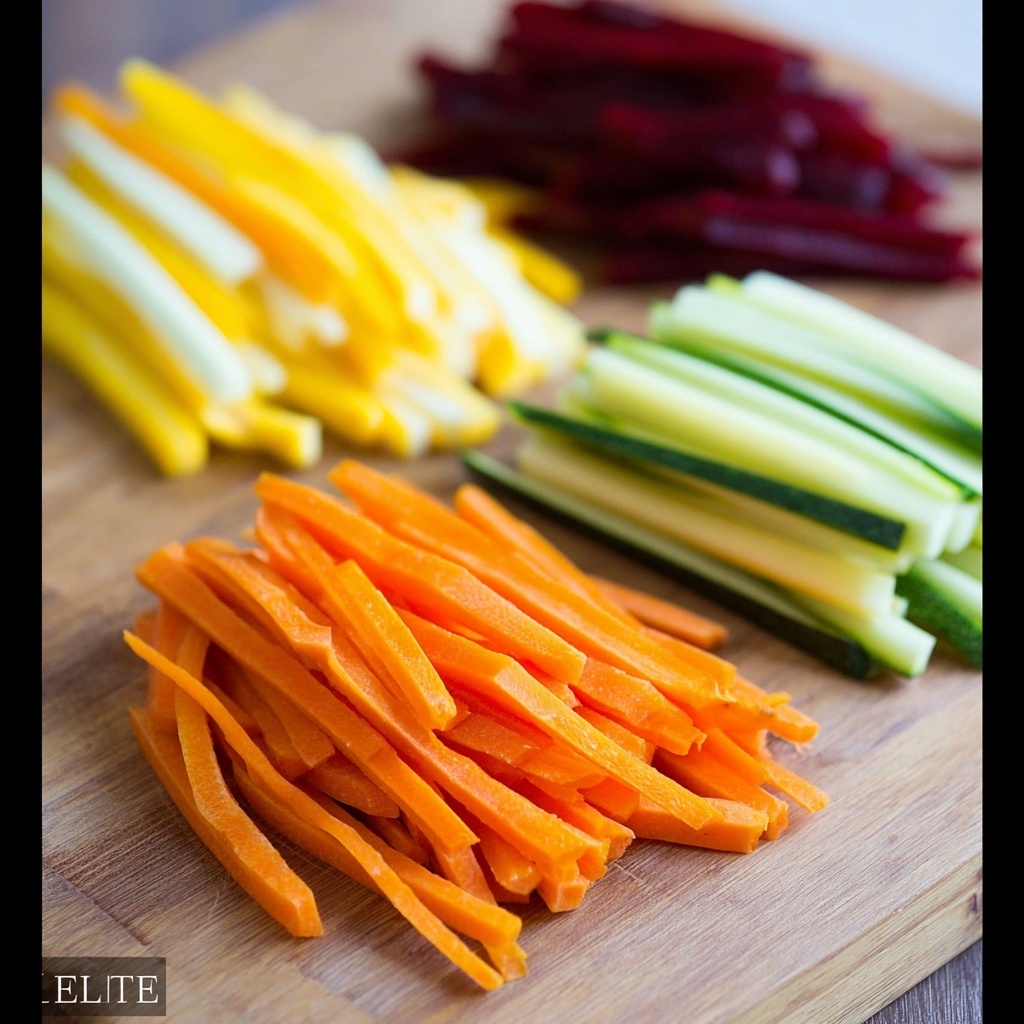
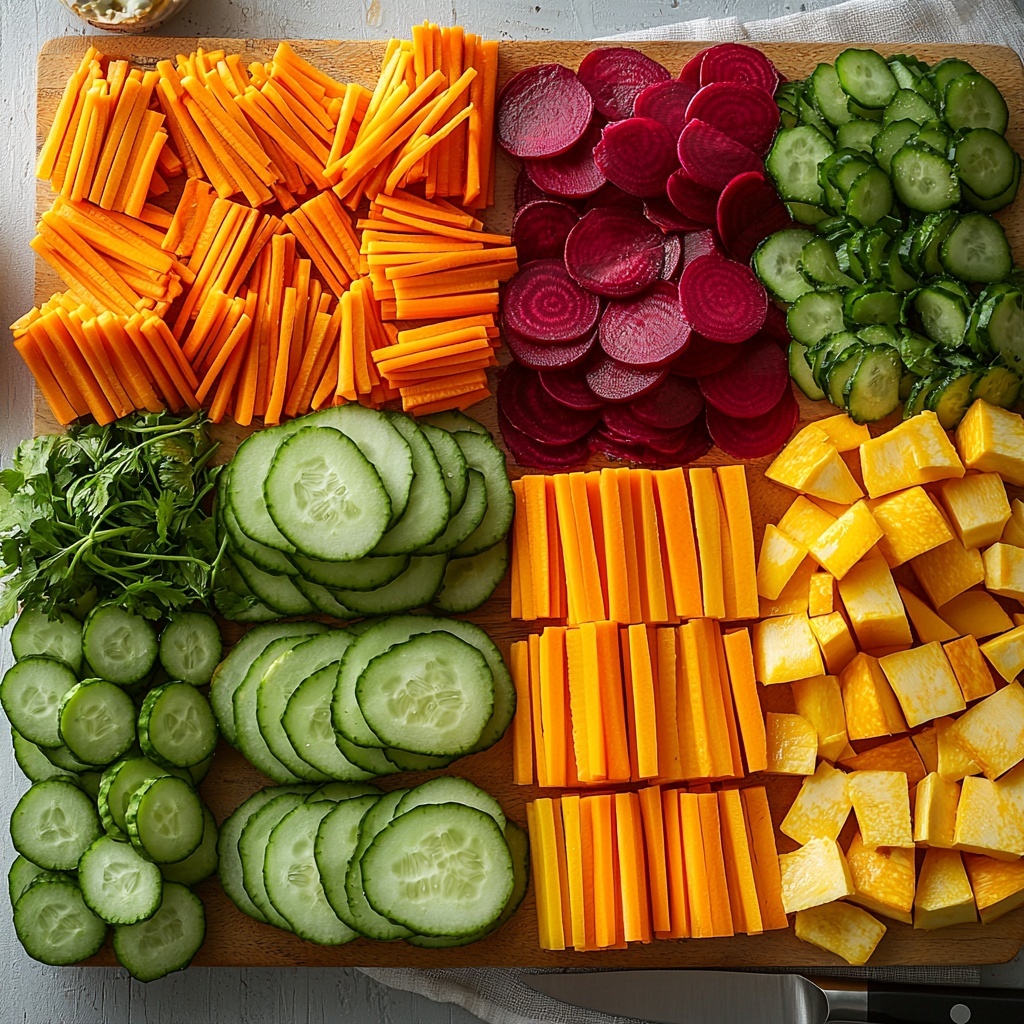
If you’ve ever admired those perfectly thin, elegant strips of vegetables decorating gourmet dishes or adding a crisp texture to salads and stir-fries, you’re going to love mastering the art behind them. This guide on How to Cut Julienne Strips Recipe will not only reveal the secrets of slicing vegetables into those iconic matchstick shapes, but it will also empower you to bring professional flair to your kitchen prep. Whether it’s carrots, cucumbers, beets, or squash, learning this technique will elevate your knife skills and inspire creative plating ideas that wow every time.
Ingredients You’ll Need
Getting started with How to Cut Julienne Strips Recipe is refreshingly simple. All you need is a fresh vegetable and a sharp knife – the perfect combo for adding color, crunch, and subtle sweetness to any dish.
- Fresh vegetable of choice: Carrots, cucumbers, beets, or squash work beautifully for their firmness and vibrant colors.
- Sharp chef’s knife: Essential for clean cuts that maintain the integrity of your julienne strips.
- Vegetable peeler: Useful for removing outer layers and ensuring a smooth surface for easier slicing, especially with tougher skins like carrots or beets.
- Cutting board: Provides a stable base for safe, precise cutting.
How to Make How to Cut Julienne Strips Recipe
Step 1: Peel the Veggies
Start by peeling your vegetable, particularly when working with carrots or beets, to remove the tough outer skin. A vegetable peeler makes this quick and easy, delivering a fresh, clean surface that’s much easier to slice.
Step 2: Cut into 2- to 3-Inch Pieces
Trim off any root or stem ends and slice your vegetable into pieces about 2 to 3 inches long. These manageable sections ensure safety and control while slicing and help you create uniform julienne strips.
Step 3: Create a Stable Base
Place each piece flat on your cutting board. Carefully trim a thin slice off the rounded side to square it off, giving you a flat, stable base that prevents slipping and promotes even slicing.
Step 4: Slice into Thin Planks
With the stable side down, slice the vegetable into thin planks around 1/16 to 1/8 inch thick. These thin slices are the building blocks of your julienne strips.
Step 5: Cut Planks into Thin Strips
Stack several planks carefully, then slice them again lengthwise into matching 1/16- to 1/8-inch strips. Don’t forget to julienne the initial trimmed piece, making use of every bit of your vegetable and minimizing waste.
Alternative Step: Cut at a Bias
If you want to mix things up, try cutting your cylindrical vegetable on an extreme diagonal cut, about 2 to 3 inches long. Then, cut these diagonal pieces into thin slices spaced 1/16 to 1/8 inch apart. Stack and slice these pieces into strips just like in the classic method.
How to Serve How to Cut Julienne Strips Recipe
Garnishes
Julienne strips add an instant touch of elegance to salads, soups, and entrees. Their thin, uniform shape offers a delicate crunch and a burst of color, perfect for garnishing plates with fresh vibrancy.
Side Dishes
Use julienne strips as the star component in refreshing vegetable slaws or lightly sautéed stir-fries. Their shape allows for quick, even cooking or crisp raw texture that complements a wide array of meals.
Creative Ways to Present
Try rolling julienne strips into little vegetable “nests” atop dishes or layering them in colorful stacks for eye-catching appetizers. The uniformity and thinness make these strips versatile for both casual and gourmet presentations.
Make Ahead and Storage
Storing Leftovers
Keep any leftover julienne strips fresh by placing them in an airtight container lined with a damp paper towel in the refrigerator. This protects their crispness for up to 2 days.
Freezing
While freezing julienne-cut raw veggies isn’t ideal due to texture loss, you can blanch certain vegetables like carrots before freezing to preserve color and nutrients. Store in freezer bags, then thaw gently before use.
Reheating
If you’ve used julienne strips in cooked dishes, gently reheat in a pan over low heat or briefly in the microwave. This method helps maintain their delicate texture and vibrant appearance without overcooking.
FAQs
What is the ideal thickness for julienne strips?
The perfect julienne strips are typically 1/16 to 1/8 inch thick, providing a balance between delicate texture and manageable structure.
Can I use any vegetable for julienne cuts?
Most firm vegetables like carrots, cucumbers, beets, and squash work great for julienne cuts due to their density and shape.
Is using a mandoline better for julienne cuts?
A mandoline can speed up the process and provide uniform slices, but mastering the knife technique is invaluable and gives you control over thickness and safety.
How can I prevent the strips from breaking?
Ensuring your knife is sharp and the vegetables are fresh and firm helps maintain strip integrity. Also, stacking and cutting gently reduces breakage.
What dishes are best suited for julienne strips?
Julienne strips shine in salads, slaws, stir-fries, garnishes, and any dish where delicate, uniform vegetable presentation enhances both look and texture.
Final Thoughts
Once you’ve practiced How to Cut Julienne Strips Recipe, you’ll find that what seemed like a tricky knife skill turns into a fun and rewarding way to add beauty and flavor to your meals. Whether you’re aiming for a stylish garnish or preparing veggies for a crisp salad, this method brings unmatched elegance and precision to your kitchen repertoire. Grab your knife, pick your favorite vegetable, and enjoy the satisfying rhythm of cutting perfect julienne strips today!
Print
How to Cut Julienne Strips Recipe
- Prep Time: 2 minutes
- Cook Time: 0 minutes
- Total Time: 2 minutes
- Yield: 1 serving
- Category: Preparation
- Method: No-Cook
- Cuisine: French
Description
Learn how to perfectly cut vegetables into julienne strips using classic French and alternative methods. This quick and easy guide demonstrates step-by-step instructions to transform carrots, cucumbers, beets, squash, or any similar vegetable into thin, matchstick-sized strips, perfect for salads, stir-fries, and garnishes.
Ingredients
Ingredients
- 1 vegetable (carrot, cucumber, beet, squash, etc.)
Instructions
- Peel veggies: If julienning a carrot or beet, first peel the outer layer using a vegetable peeler to remove the tough skin.
- Cut into 3 inch pieces: Cut the vegetable into 2 to 3-inch segments, trimming off any root or stem ends to ensure uniformity and ease of slicing.
- Trim off edge: Place the piece cut-side down on a cutting board and slice a thin piece off the rounded side to create a flat, stable base for safer cutting.
- Cut into planks: With the piece flat-side down, slice it into thin planks approximately 1/16 to 1/8 inch thick. Stack a few planks and cut them into similarly thin strips to achieve the julienne shape. Remember to also cut the trimmed edges into strips.
- Alternative method – Cut at a bias: For cylindrical vegetables, start at the root or stem end and cut diagonally at a 2 to 3-inch length with slices spaced 1/16 to 1/8 inch apart.
- Cut into strips: Stack several diagonal slices and cut across them into thin strips of the same thickness to complete the julienne cuts.
Notes
- Always use a sharp knife or mandoline for cleaner cuts and safety.
- Julienned vegetables cook quickly and are ideal for stir-fries, salads, and garnishes.
- Keep your fingers curled under while cutting to prevent injury.
- The thickness can be adjusted slightly depending on the dish’s requirements.